Z60, Z80, Z120 and Z275: Galvanized Coating Weight Explained
- Share
- publisher
- Junnan Steel
- Issue Time
- Sep 21,2026
Summary
Understand Z60, Z80, Z120 and Z275 galvanized coating weights, approximate zinc thickness, test methods, selection factors and buyer inspection requirements.

Z60, Z80, Z120 and Z275: Galvanized Coating Weight Explained
Z60, Z80, Z120 and Z275 are galvanized coating-mass designations used to describe how much zinc is applied to steel sheet or coil. The number usually expresses the total zinc mass on both sides in grams per square metre, but the governing product standard, sampling method and acceptance rule must always be stated.
For buyers, coating weight is only one part of a complete specification. Steel grade, thickness basis, surface treatment, forming route, exposure, inspection and storage all affect whether a galvanized coil is suitable for its intended use.
The Direct Answer
Under a specification that defines the designation on a total-both-sides basis, Z60 means 60 g/m², Z80 means 80 g/m², Z120 means 120 g/m² and Z275 means 275 g/m² of zinc. A higher number indicates more zinc mass, but it does not by itself establish corrosion life, grade equivalence or compliance with another standard.
Do not compare quotations from the coating number alone. Confirm whether the value is a minimum or nominal requirement, whether it applies to a three-spot or single-spot test, and which test method and product standard control acceptance.
How to Read the Designation
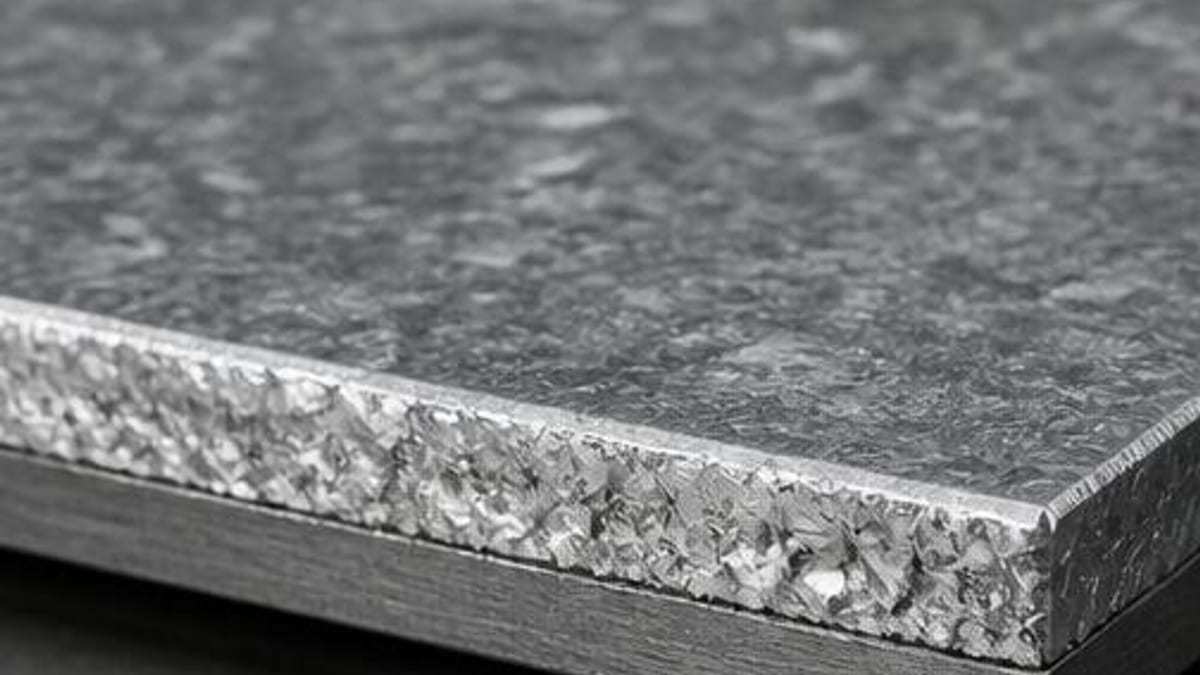
The coating surrounds the steel substrate and provides barrier protection plus sacrificial protection where small areas of steel are exposed. The designation reports coating mass rather than directly measured layer thickness. Coating distribution may differ between the two faces, so dividing the total by two is only a planning estimate unless equal coating is explicitly specified and verified.
| Designation | Total zinc mass commonly indicated | Approximate zinc thickness per side if evenly split | Buyer interpretation |
|---|---|---|---|
| Z60 | 60 g/m² | About 4.2 µm | Relatively light coating; suitability depends strongly on exposure and the governing specification. |
| Z80 | 80 g/m² | About 5.6 µm | Light coating used where the product specification and service conditions permit. |
| Z120 | 120 g/m² | About 8.4 µm | More zinc reserve than Z60 or Z80, subject to the same standard and test basis. |
| Z275 | 275 g/m² | About 19.3 µm | Heavier coating often considered for more demanding exposure, but not a universal durability guarantee. |
Why the Standard and Test Basis Matter
The same-looking designation can be misunderstood when suppliers and buyers use different standards, certificate formats or sampling rules. One document may report a minimum average from multiple test positions, while another may include separate single-spot requirements. Local coating readings also vary across sheet width and length.
- Name the exact product standard and edition in the purchase order.
- State the coating type and designation exactly as required by that standard.
- Define whether the order requires equal coating or permits different masses on each face.
- Agree on sampling location, specimen preparation, test method and acceptance criteria.
- Do not claim that a Z designation is automatically equivalent to a designation from another standards system.
When comparing an unfamiliar designation with Z60, Z80, Z120 or Z275, compare the underlying mass requirement, test type and tolerance—not only a conversion table or commercial shorthand.
Coating Mass Is Not the Same as Coating Thickness
Coating mass is generally determined through a prescribed mass-loss or other standardized method. Portable magnetic instruments estimate local coating thickness and can be useful for process checks, incoming inspection or investigation, but results depend on calibration, surface condition, substrate and measurement procedure.
Mass per area
Reported in g/m² and normally tied to a defined laboratory test, specimen size and calculation method.
Local thickness
Measured at individual points and useful for mapping variation, but not automatically interchangeable with the specified coating-mass test.
Two-sided total
A total-both-sides designation does not prove that each side carries exactly half of the zinc.
Certificate value
Review the certificate against the purchase standard and acceptance category rather than accepting an isolated number.
How Coating Weight Affects Selection
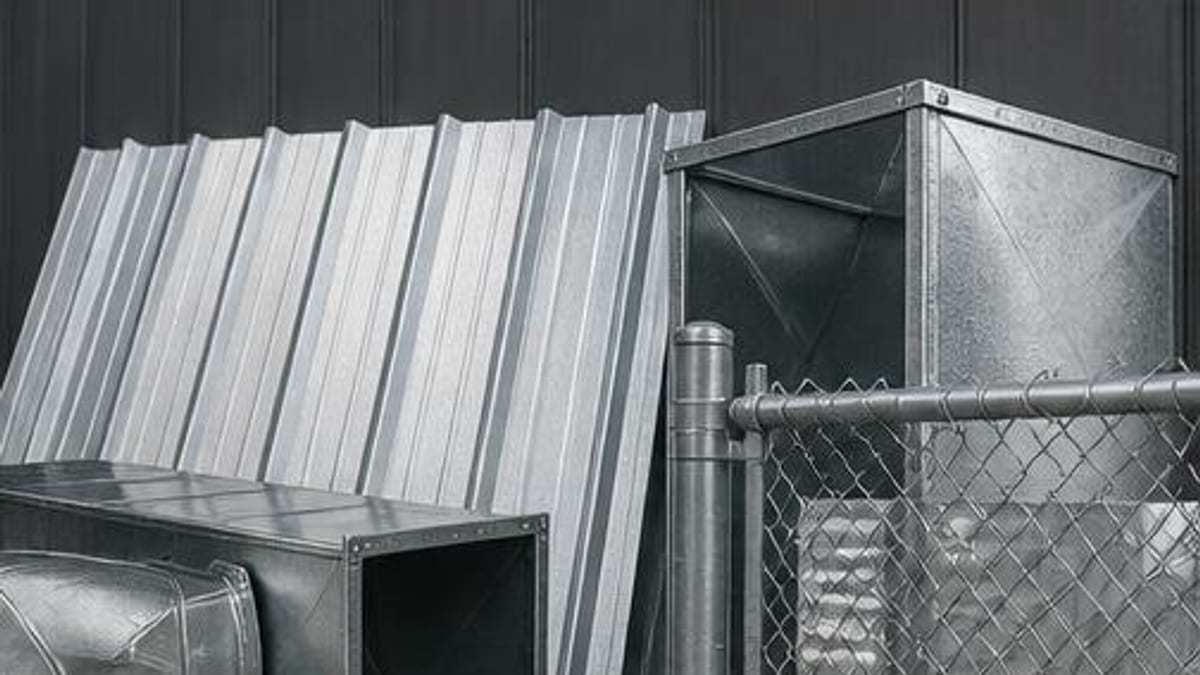
More zinc generally provides a larger sacrificial reserve, but actual performance depends on moisture, salts, pollutants, temperature, wet-dry cycling and design details. Cut edges, drainage, fasteners, crevices and contact with incompatible materials can become controlling factors.
Dry interior components
A lighter coating may be adequate where the relevant standard, low exposure and product design support it.
Roofing and cladding
Consider exterior atmosphere, underside condensation, profile forming, site cuts, fasteners and water drainage together.
Ductwork and formed parts
Check drawing severity, bend radii, coating adhesion and whether the interior or exterior sees condensation or chemicals.
Outdoor fencing
Review rain, soil splash, vegetation, cut ends, welds and local marine or industrial exposure.
For severe marine, industrial or continuously wet conditions, coating selection should be reviewed as part of the full corrosion-control system. A painted galvanized product, another metallic coating or additional detailing may be appropriate, depending on the project specification.
Inspection: What Buyers Should Verify

- 01
Confirm identity
Match coil number, grade, dimensions and coating designation to the purchase order and inspection certificate.
- 02
Check the test basis
Verify the referenced standard, sampling method and whether reported results are average, three-spot or single-spot values.
- 03
Review surface condition
Inspect for scratches, bare areas, edge damage, contamination and wet-storage staining.
- 04
Use instruments correctly
Calibrate portable gauges on suitable references and treat local readings according to the agreed inspection plan.
- 05
Protect during logistics
Confirm passivation or oiling as ordered, dry export packing, edge protection and storage instructions.
Common Purchasing Mistakes
Comparing price without matching coating basis: two offers can use different standards, test categories or actual coating masses.
Assuming twice the mass means twice the service life: corrosion rate is not constant across all environments, and detailing often controls failure.
Dividing by two as an acceptance rule: an even per-side split is an estimate unless the order requires it.
Ignoring fabrication: tight bends, roll forming, welding and cutting can affect coating continuity and exposed edges.
Using a handheld reading as final proof: local thickness checks do not automatically replace the specified coating-mass test.
Galvanized Coil Purchase Checklist
- End use and service environment
- Applicable standard and edition
- Steel grade and mechanical properties
- Nominal thickness and measurement basis
- Zinc coating designation and coating type
- Equal or differential coating requirement
- Surface finish, passivation and oiling
- Forming, welding and cut-edge details
- Sampling, test method and acceptance criteria
- Certificate, traceability and packing requirements
Frequently Asked Questions
Does Z275 mean 275 g/m² on each side?
Normally it refers to the total for both sides under the applicable specification, not 275 g/m² per side. Always confirm the standard and certificate basis.
Is Z275 always better than Z120?
It contains more zinc mass on the same reporting basis, but “better” depends on forming needs, exposure, design, cost and the complete product specification.
Can I convert Z275 directly to another standard’s coating grade?
Not safely from the label alone. Compare coating chemistry, mass, single-spot and average requirements, sampling and tolerances in both standards.
Can a coating-thickness gauge confirm Z120 or Z275?
It can provide useful local measurements when properly calibrated, but contractual compliance should follow the test and acceptance method named in the purchase standard.
Does a heavier zinc coating prevent white rust?
No. White corrosion products can develop when fresh galvanized surfaces remain wet without airflow. Surface treatment, dry packing, ventilation and prompt handling of wet material remain important.
Specify the Whole Requirement
Z60, Z80, Z120 and Z275 are useful shorthand only when connected to a standard and test basis. A reliable order defines the substrate, dimensions, zinc mass, surface treatment, fabrication, exposure, inspection and logistics as one system. More related procurement guidance is available in the Steel Plate & Coil Guide.