Q235B vs Q355B for Steel Warehouses: Which Steel Grade Should Buyers Choose?
- Share
- Issue Time
- Jul 16,2026
Summary
A practical comparison of Q235B and Q355B for steel warehouses and workshops, with buyer scenarios, grade selection logic, site-based product insights, FAQ, and EEAT-friendly supporting context from worldsteel and JunNan Steel.
Why Buyers Ask About Q235B and Q355B First
When a buyer requests a quotation for a steel warehouse or steel workshop, one of the first technical questions is often simple: should the primary structure use Q235B or Q355B? This is not a cosmetic specification. The steel grade affects load capacity, section size, overall steel consumption, and sometimes the final delivered cost.
On JunNan Steel’s live steel structure product pages, Q235B and Q355B already appear in the product naming itself. That is a strong signal that real customers are asking for these grades in actual projects, not just in theory. For warehouse importers and contractors, understanding the difference helps avoid both over-specification and under-design.
What Q235B and Q355B Mean
In practical terms, Q235B and Q355B are commonly used Chinese structural steel grades. The number broadly corresponds to the nominal yield strength level in MPa class, so Q355B is the higher-strength grade compared with Q235B. In project language, that usually means Q355B can often achieve the same structural task with better reserve capacity or with more efficient member sizing.
For buyers comparing offers, the key point is not simply “higher grade is always better.” The right answer depends on span, height, crane load, wind requirement, fabrication route, and budget target.
A Quick Comparison Table
| Grade | Typical Position | Practical Buyer Meaning |
|---|---|---|
| Q235B | Light-duty members, some secondary members, simple light workshops | Lower entry cost, suitable where structural demand is moderate |
| Q355B | Main frames, warehouse columns and rafters, longer spans, heavier-duty workshops | Higher strength, often more suitable for larger spans and more demanding export projects |
Where Q235B Usually Makes Sense
Q235B is often a reasonable choice for lighter buildings where the span is moderate, the eave height is not extreme, and there is no overhead crane. It may also be acceptable where the secondary member system carries a larger share of the enclosure work and the primary frame does not need to be pushed for efficiency.
- Light storage sheds
- Small workshops without crane load
- Projects where budget pressure is high and structural demand is moderate
- Secondary framing in some optimized schemes
That said, buyers should be careful: using a lower grade only helps when the engineer can still meet design requirements economically. If the span or load is too large, the heavier sections needed for Q235B may eat away the apparent savings.
Where Q355B Usually Becomes the Better Choice
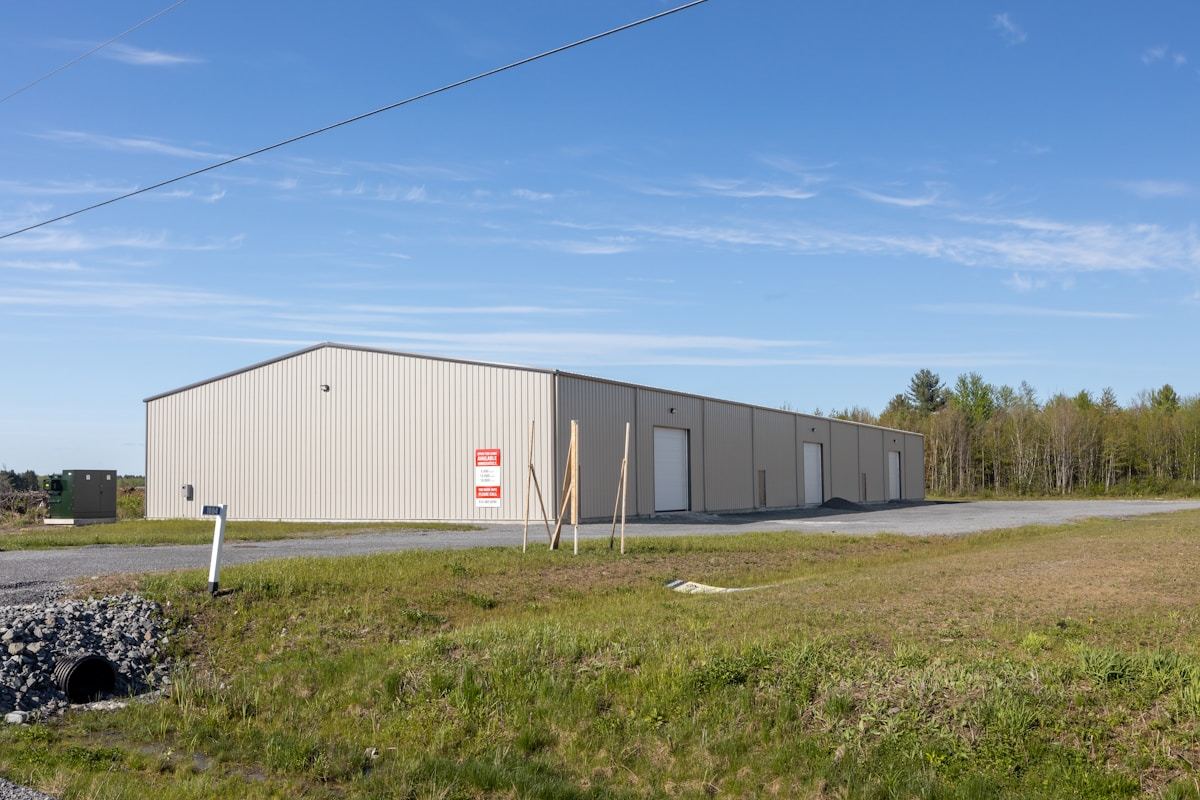
For export steel warehouses and steel workshop buildings, Q355B is frequently the more commercially practical option. This is especially true for clear-span buildings, taller warehouses, buildings in stronger wind zones, and projects with crane systems.
- Large-span steel warehouses
- Steel structure workshops with overhead cranes
- Taller warehouse buildings requiring stronger main frames
- Projects where member optimization helps reduce fabrication inefficiency
JunNan Steel’s own steel structure pages already market solutions such as prefabricated steel warehouses, galvanized structural warehouses, and industrial workshops. In that product context, Q355B is often the grade buyers expect to see on the primary frame side of the quotation.
Does Higher Strength Always Mean Lower Total Cost?
No, and this is where many generic articles fail. A stronger grade can improve the design, but project cost is still shaped by fabrication, plate thickness availability, connection detailing, galvanizing, transport, and installation method. A warehouse using Q355B may reduce member size or steel tonnage in the main frame, but the project still needs to be checked as a full system.
In real procurement, buyers should compare:
- Total structural tonnage
- Main member section sizes
- Connection complexity
- Surface treatment requirement
- Fabrication lead time
- Shipping volume and packing efficiency
That is much better than comparing grade names in isolation.
A Buyer-Focused Scenario Comparison
Scenario 1: 30m × 60m light warehouse, 8m eave height, no crane
In this kind of project, Q235B may still be a viable option if the wind load is moderate and the frame grid is not overly ambitious. If the buyer is controlling budget tightly, the supplier may evaluate whether Q235B can work on the primary frame without causing inefficiently heavy sections.
Scenario 2: 50m clear-span warehouse, 10m eave height
Once the span increases and the eave height rises, Q355B often becomes easier to justify. The higher-strength grade can help the engineer control section size and improve the behavior of the main frame more effectively than a lower-grade alternative.
Scenario 3: workshop with 10T crane
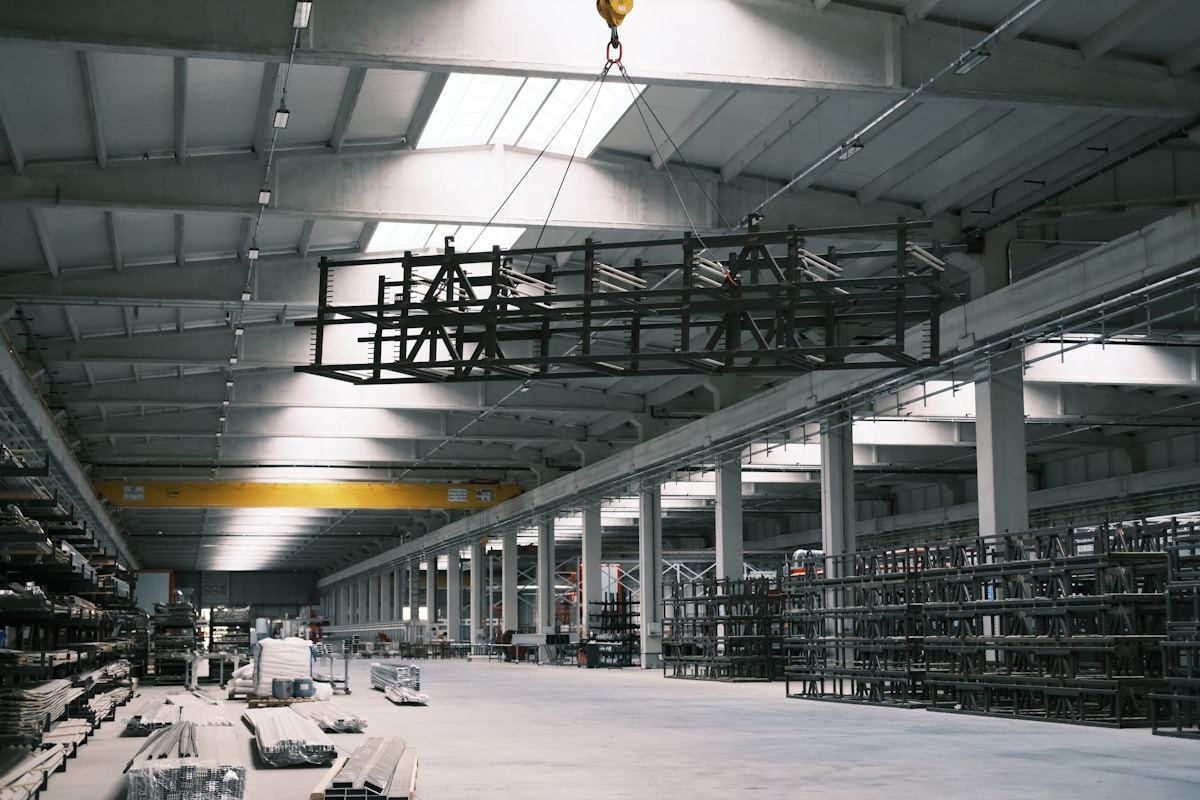
For a crane-supported workshop, Q355B is often the more natural engineering discussion point for the primary frame. The dynamic loading and local force concentration make buyers less willing to chase a small material-grade saving at the cost of structural efficiency.
How Grade Choice Connects to Steel Consumption
Earlier-stage budgeting for steel buildings usually uses kg/m² planning logic. For light warehouses, buyers often start around 35–45 kg/m². For more standard warehouses or taller buildings, it may move toward 45–60 kg/m². For crane workshops, it may reach 60–80 kg/m² or beyond. The steel grade is one of the reasons these ranges shift.
Choosing Q355B does not magically guarantee a lower steel consumption, but in many practical warehouse and workshop designs it gives the engineer more flexibility to avoid unnecessarily bulky sections.
What JunNan Steel’s Existing Product Pages Already Tell Us
Your live catalog gives more useful commercial detail than many “AI encyclopedia” blog posts. Across your steel structure pages, buyers can already see several decision-making cues:
- Q235B and Q355B are both actively used in your product positioning
- Some warehouse solutions are described as hot-dip galvanized, which is highly relevant for corrosion-sensitive markets
- Your site states that some warehouse solutions can achieve up to 48m clear span without middle columns
- At least one existing product page states a service life of more than 70 years
- You separate steel structure warehouse and steel structure workshop, which matches the real difference in structural demand
This is exactly the kind of site-native detail that helps a blog feel grounded in real product work instead of generic internet copy.
How worldsteel Helps Frame the EEAT Side
For public industry framing, the World Steel Association is a useful reference point. On its steel facts pages, worldsteel describes steel as a material valued for strength, ductility, and versatility, and it presents steel within a circular-economy and long-life material context. That helps support two points relevant to warehouse buyers:
- Steel is not chosen only because it is common; it is chosen because its structural properties support demanding commercial use cases
- Long service life and recoverability remain important parts of the material story for industrial construction
In this article, worldsteel is not being used to prove that Q355B is always better than Q235B. Instead, it supports the broader material-level case for structural steel and durability.
FAQ: Q235B vs Q355B for Warehouses
Is Q355B always better than Q235B?
No. Q355B is the stronger grade, but the best choice depends on the actual building requirement. For light projects, Q235B may still be commercially sensible.
Which grade is more common for steel warehouses?
For many export warehouse and workshop projects, Q355B is commonly preferred for the main frame, especially when spans, height, or loads are more demanding.
Can Q235B still be used in a warehouse project?
Yes, especially in lighter-duty buildings or in selected members, as long as the engineer confirms the design is appropriate.
What if the building includes a crane?
Crane-supported workshops usually need more careful structural design. In those projects, Q355B often becomes more attractive for the primary frame.
Does galvanizing matter more than grade in some countries?
In coastal or humid environments, corrosion protection can be just as important as grade selection. Buyers should look at grade and surface treatment together.
When to Ask for Q235B and When to Ask for Q355B
If you are buying a light workshop or a relatively simple warehouse, ask your supplier whether Q235B is sufficient and what the tonnage impact would be. If you are buying a larger clear-span warehouse, a taller logistics building, or a workshop with crane load, ask for a Q355B-based comparison from the start.
The right quotation should not just say “Q235B” or “Q355B.” It should show how the grade affects structural tonnage, member size, corrosion treatment, and delivery scope.
Why Work With JunNan Steel
JunNan Steel is well positioned for this kind of discussion because your business is not limited to one single structural SKU. Your site already shows one-stop supply capability across structural steel, steel plate, steel pipe, GI/PPGI, fasteners, machinery, integrated houses, and steel structure buildings. That matters because buyers usually need a coordinated solution, not just one grade line on a quotation sheet.
To receive a preliminary proposal within 24 hours, please send:
- Building dimensions (L × W × H)
- Project location
- Wind and snow load requirements
- Whether a crane is required
- Preferred roof and wall panel system
- Whether painted or hot-dip galvanized structure is preferred
Our engineering and sales team can then compare Q235B and Q355B on a real project basis, rather than giving a generic answer that is impossible to use for procurement.