PE, SMP and PVDF Coatings for PPGI Coil: What Buyers Need to Know
- Share
- publisher
- Junnan Steel
- Issue Time
- Sep 22,2026
Summary
Compare PE, SMP and PVDF coatings for PPGI coil, including weathering, formability, exposure, specification and pre-shipment inspection factors.
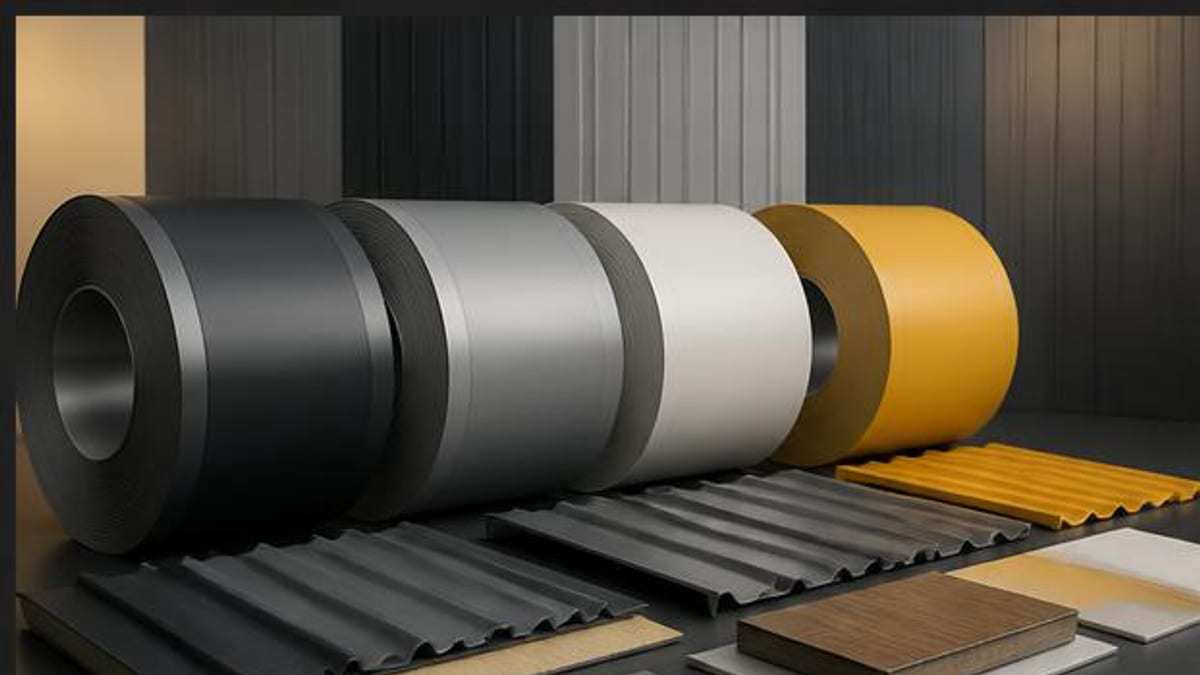
PE, SMP and PVDF Coatings for PPGI Coil
PE, SMP and PVDF are common topcoat families for prepainted galvanized steel coil. They differ in weathering resistance, flexibility, color and gloss retention, chemical resistance, processing behavior and cost. The best choice is not simply the coating with the highest headline performance; it is the system that fits the exposure, design life, forming process, color, maintenance plan and applicable specification.
These resin names describe only part of a multilayer coil-coating system. Buyers should also define the metallic-coated substrate, pretreatment, primer, back coat, dry-film thickness, color, gloss, test methods and acceptance criteria.
The Short Answer
PE is a practical general-purpose choice for moderate environments and cost-sensitive applications. SMP is often selected when improved hardness, heat resistance and outdoor durability are needed. PVDF is commonly considered for demanding exterior architecture where long-term color and gloss retention are priorities. These are selection tendencies, not universal guarantees: formulations and warranties vary by coating supplier and project.
Understand the Complete PPGI Coating System
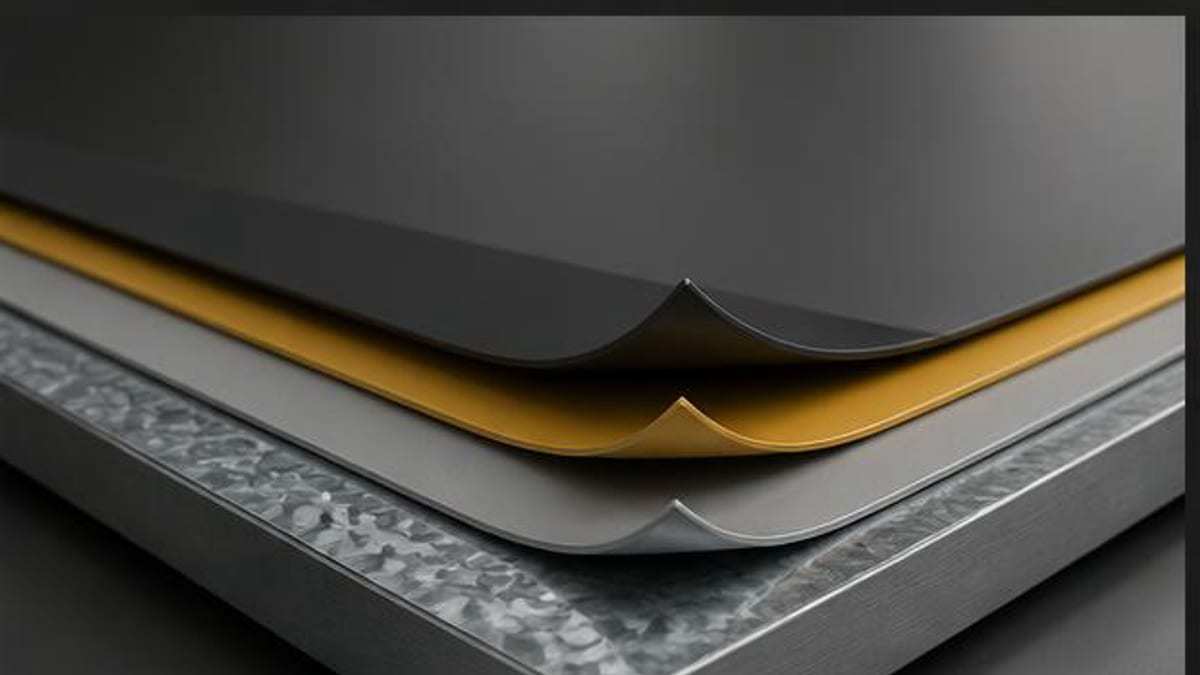
A PPGI sheet normally combines a steel substrate, zinc-based metallic coating, chemical pretreatment, primer, finish coat and a back-side coating. Each layer has a different function. The metallic coating helps protect the steel, pretreatment supports adhesion and corrosion resistance, primer connects the substrate system to the finish, and the topcoat provides color plus much of the weather-facing performance.
Substrate and metallic coating
Steel grade, thickness and zinc coating must suit structural, forming and corrosion requirements.
Pretreatment and primer
These influence adhesion, underfilm corrosion resistance and compatibility with the finish coat.
Topcoat
The resin, pigments, additives and curing process affect appearance, flexibility and weathering.
Back coat
The reverse-side system should reflect condensation, insulation, adhesive and service exposure.
Two coils both described as “PVDF” or “SMP” may not perform identically. Resin content, pigment selection, primer chemistry, film build, curing and production control matter. Procurement documents should therefore specify measurable system requirements rather than relying on a resin name alone.
PE, SMP and PVDF Compared
| Selection factor | PE (polyester) | SMP (silicone-modified polyester) | PVDF (polyvinylidene fluoride) |
|---|---|---|---|
| Typical positioning | General-purpose and economical | Mid-to-higher outdoor performance | High-performance exterior architecture |
| Formability | Often good, depending on formulation | Can be harder; verify bend and profile needs | Good systems are available, but confirm the exact product |
| Hardness and scratch resistance | Varies from standard to enhanced grades | Often emphasized as a strength | Formulation-specific; do not infer from resin name alone |
| Color and gloss retention | Suitable for moderate requirements | Generally improved over basic PE systems | Often selected where long-term retention is critical |
| Heat performance | Project-specific limits must be checked | Often considered for improved heat resistance | Good weathering does not remove the need to verify service temperature |
| Relative cost | Usually lowest of the three | Usually between PE and PVDF | Usually highest |
Important: the table gives broad purchasing orientation, not guaranteed values. Ask for the coating manufacturer’s technical data, approved color range and project-specific test requirements.
When PE Is a Sensible Choice
Polyester systems are widely used for roofing, wall panels, appliances and general fabrication because they can balance appearance, forming performance and cost. PE may be appropriate for interior use, sheltered components or exterior applications with moderate durability expectations.
- Define whether the offer is standard PE or an enhanced polyester formulation.
- Check exterior exposure, UV intensity, roof temperature and maintenance access.
- Confirm minimum primer and topcoat dry-film thickness rather than only total paint thickness.
- Verify bend performance after the intended roll-forming or stamping operation.
- Do not assume every color weathers at the same rate.
When SMP May Offer a Better Balance
SMP uses silicone modification within a polyester-based system. It is commonly positioned above basic PE for weathering, hardness and heat resistance while remaining below many PVDF systems in cost. It can be attractive for roofing and cladding where buyers need a stronger outdoor specification without automatically moving to PVDF.
Check flexibility
A harder film may need closer review for tight bends, severe profiles and low-temperature forming.
Check gloss behavior
Initial gloss and long-term retention depend on the formulation and exposure.
Check the exact chemistry
“SMP” covers different commercial formulations; compare tested properties, not names alone.
When PVDF Is Worth Considering
PVDF systems are frequently specified for prominent exterior façades, roofs and wall cladding where resistance to UV exposure, chalking and color change is a major design concern. They are not automatically necessary for every building, and the higher material cost should be weighed against exposure, appearance expectations, access for replacement and life-cycle priorities.
For PVDF procurement, confirm the coating supplier’s system designation, primer, resin basis, approved pigments and recommended forming limits. Some bright or highly saturated colors can be more difficult to formulate for long-term exterior stability. Metallic and mica finishes may also require careful batch control, installation direction and sample approval to manage visual variation.
Match the Coating to the Exposure
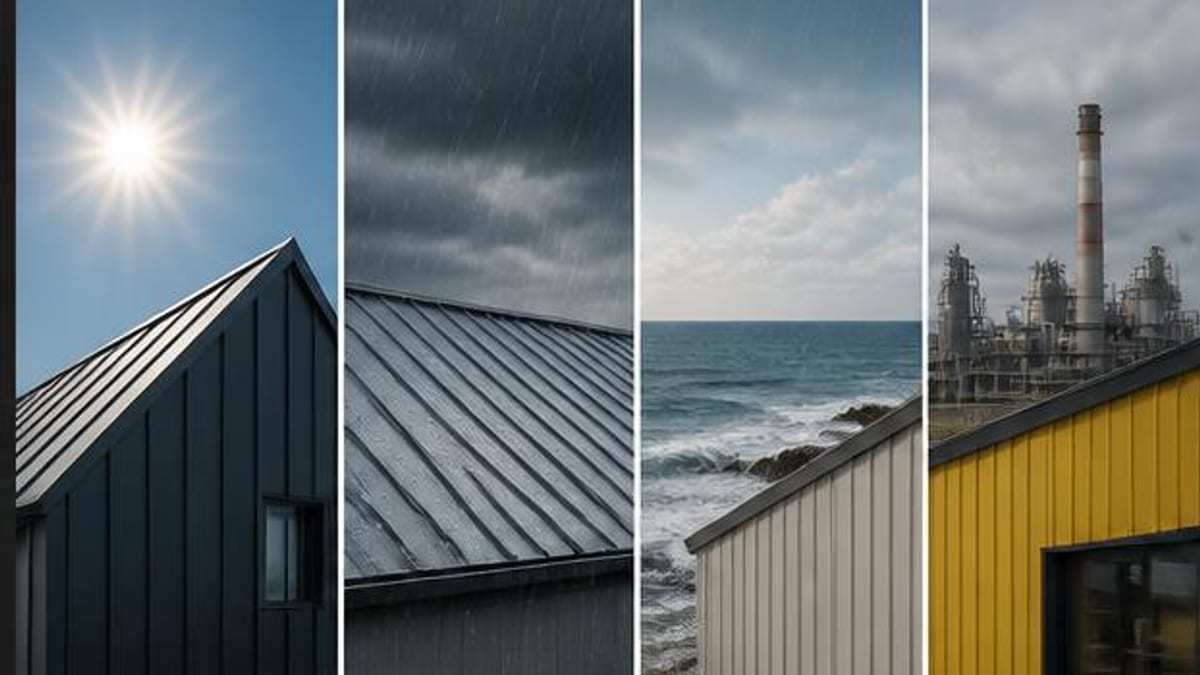
UV and heat
Roof slope, orientation, dark colors and local climate affect surface temperature and fading risk.
Marine atmosphere
Salt deposition, distance from the coast, prevailing wind and wash-down frequency influence corrosion.
Industrial atmosphere
Chemical pollutants and airborne deposits require project-specific compatibility review.
Condensation
Back-side moisture, insulation design and ventilation can matter as much as the exposed face.
Cut edges, fasteners, overlaps, sealants and drainage often control local failure. A premium topcoat cannot compensate for unsuitable substrate coating, trapped water or incompatible accessories.
What Buyers Should Put in the Purchase Specification
- 01
Define the end use
Name the building component, forming route, location, exposure and expected appearance.
- 02
Specify the substrate
State steel grade, thickness basis, width, metallic coating type and coating mass.
- 03
Define the paint system
State pretreatment, primer, topcoat family, back coat and minimum dry-film thickness by layer.
- 04
Control appearance
Use an agreed color standard or approved physical sample, plus gloss, texture and batch requirements.
- 05
Set performance tests
Reference applicable methods for adhesion, bend, impact, hardness, corrosion and accelerated weathering, with agreed acceptance limits.
- 06
Agree on inspection
Define sampling, certificate content, traceability, packaging and handling before production.
Inspection Before Shipment
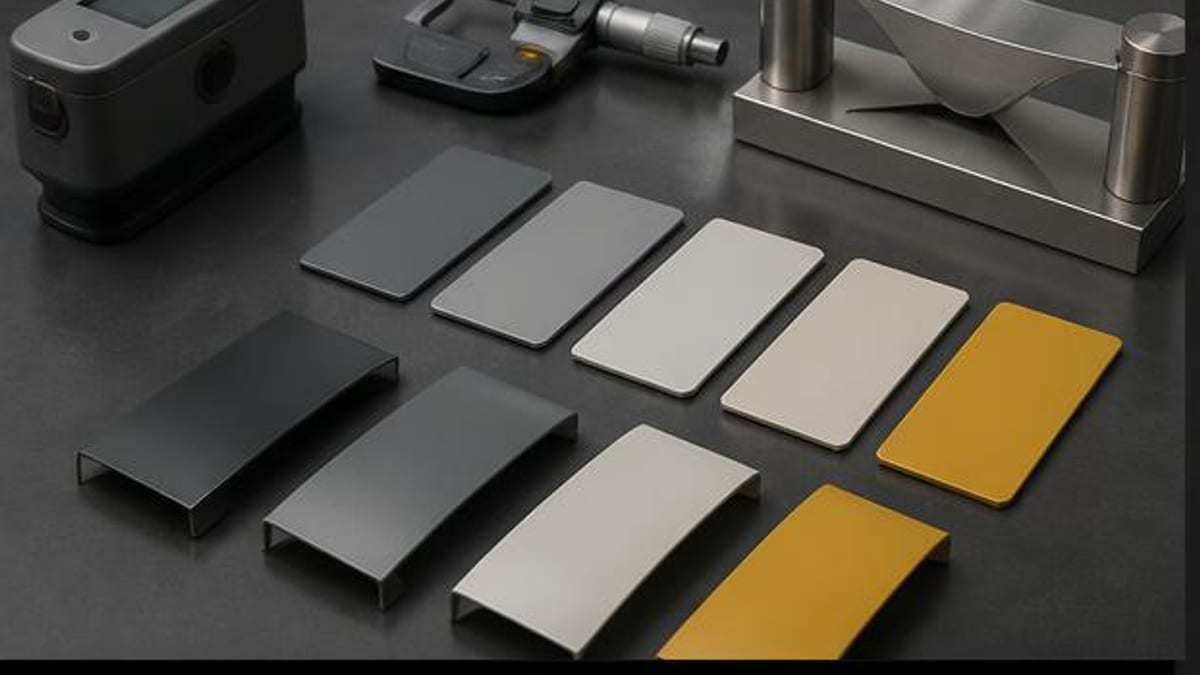
Incoming or pre-shipment inspection should connect measured results to the agreed purchase specification. Visual inspection alone cannot establish full coating performance.
- Coil and heat traceability
- Steel grade and dimensions
- Metallic coating designation
- Color under agreed lighting
- Gloss at the specified geometry
- Dry-film thickness by agreed method
- Adhesion and bend performance
- Surface defects and edge damage
- Protective film requirements
- Dry export packing and storage marks
Portable readings are useful, but instrument calibration, substrate effects and measurement location must be controlled. Laboratory and accelerated tests help compare systems under defined conditions; they do not translate directly into an exact number of service years in every climate.
Common Buying Mistakes
Choosing only by resin name: PE, SMP and PVDF labels do not describe the entire coating system.
Comparing total paint thickness only: primer, topcoat and back-coat allocation can differ.
Ignoring color and gloss: pigments and finish level affect weathering, appearance and heat absorption.
Using salt-spray hours as a service-life promise: accelerated tests are comparative tools under prescribed conditions.
Skipping forming trials: coating hardness and flexibility must suit the actual profile and bend geometry.
Assuming a warranty is universal: coverage depends on location, slope, distance from corrosive sources, maintenance and documented installation conditions.
Frequently Asked Questions
Is PVDF always better than SMP?
PVDF is often preferred for demanding color and gloss retention, but SMP may offer a better cost-performance balance for some roofs and walls. The decision depends on exposure, forming, appearance and project requirements.
Is SMP the same from every paint supplier?
No. Resin modification, pigments, primer and film build can vary. Compare the exact coating system and test data.
Can standard PE be used outdoors?
Yes, in suitable applications, but the required durability, climate, color and maintenance conditions should be checked against the offered system.
Does thicker paint always mean longer life?
Not by itself. Layer chemistry, pretreatment, adhesion, curing, substrate coating and exposure are also important.
How should buyers approve color?
Use a named color reference plus an approved physical sample, defined gloss and agreed viewing conditions. For metallic finishes, also control batch and installation direction.
Choose a System, Not Just a Resin
A sound PPGI order links PE, SMP or PVDF to a defined substrate, metallic coating, pretreatment, primer, film thickness, appearance, fabrication route and test plan. That approach makes quotations easier to compare and reduces avoidable disputes. More procurement topics are available in the Steel Plate & Coil Guide.