Galvanized Steel Coil for Africa and Middle East Construction
- Share
- publisher
- Junnan Steel
- Issue Time
- Sep 28,2026
Summary
A climate-oriented buyer guide to galvanized construction coil for humid, coastal, hot-arid and dusty environments, covering specification, forming, storage and inspection.
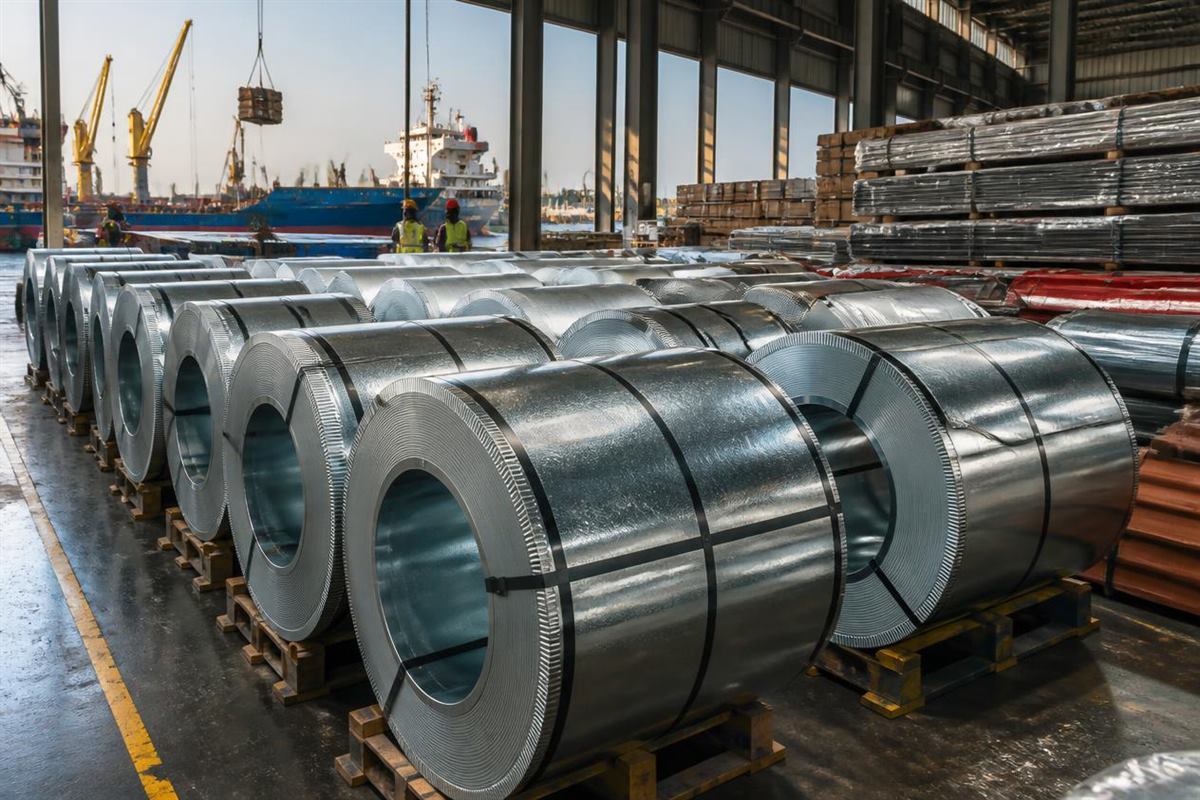
Galvanized Steel Coil for Africa and Middle East Construction
Buying galvanized steel coil for Africa and Middle East construction starts with the project microclimate, fabrication route and storage chain—not a single regional specification. A humid coastal warehouse, a hot inland roofing project and a dust-exposed site can impose different risks even within the same country.
This guide shows how buyers can translate those conditions into a traceable purchase specification. It does not assign one zinc coating, steel grade or service-life claim to an entire region; the final requirement should follow the project design, applicable standard and qualified technical review.
The Direct Answer
For GI coil for construction, define the substrate standard and grade, ordered dimensions and tolerances, zinc coating designation, surface treatment, forming route, intended environment, inspection evidence, packaging and storage plan. Then confirm that these items work together for the roof, wall, duct, frame or fabricated component being produced.
1. Segment the Project by Actual Exposure
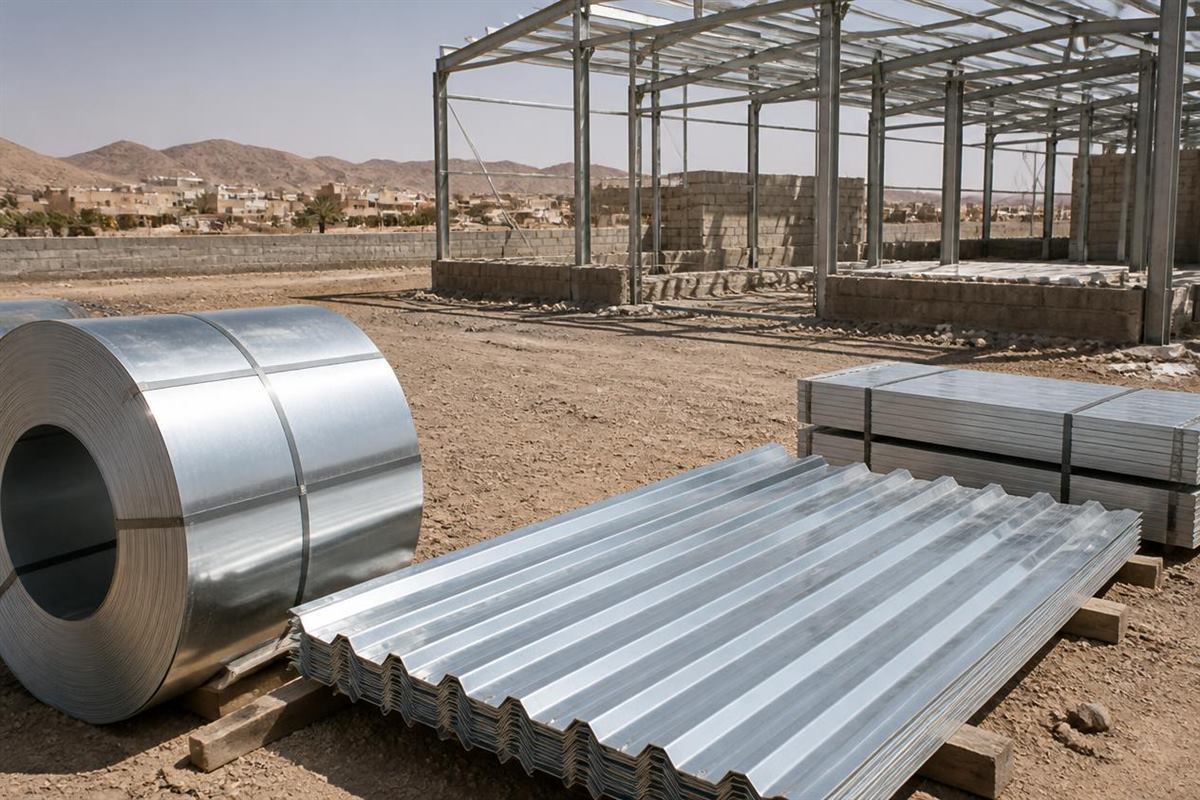
Humid or coastal
Frequent condensation, long wet periods and airborne salts can increase corrosion pressure. Clarify distance and shielding from the coast, ventilation, drainage, cut-edge exposure and contact with dissimilar materials.
Hot and arid
Low average rainfall does not remove every risk. Large temperature swings can create condensation inside packs or buildings, while intense solar heating can affect handling and building design. Confirm the actual moisture cycle rather than assuming “dry” means risk-free.
Dusty or abrasive
Dust can retain moisture, block drainage and abrade surfaces during handling or cleaning. Review site housekeeping, roof slope, sheltered deposits, transport covers and installation practices.
Mixed microclimates
Industrial emissions, irrigation, animal housing, wet processes or poorly ventilated interiors may dominate the exposure. Treat these as project-specific conditions rather than country-level assumptions.
A useful inquiry describes whether the steel is exterior or interior, exposed or sheltered, washed by rain or likely to retain deposits, and whether cut edges and fastener penetrations remain visible. If the project requires a formal corrosivity classification or design life, the responsible engineer should define it under the selected design framework.
2. Connect Zinc Coating to the Whole System
Zinc coating is often expressed as a designation or nominal mass under a referenced product standard. Buyers should state whether the requirement is a total coating mass across both sides or another basis defined by that standard. Do not compare labels from different standards until their terminology, test basis and tolerances have been reviewed.
| Decision input | Why it matters | What to put in the PO |
|---|---|---|
| Exposure | Wetness, salts, deposits and ventilation influence corrosion pressure | Project environment and any engineer-defined category |
| Fabrication | Bending, roll forming and punching stress the substrate and coating | Part geometry, forming route and grade requirement |
| Edges and joints | Cut edges, overlaps, fasteners and water traps can control local durability | Detailing, compatible fasteners and post-fabrication protection if required |
| Surface treatment | Passivation, oiling or other treatment affects storage and downstream processing | Exact treatment and any process restrictions |
| Evidence | A designation without test records may not establish delivered conformity | Certificate content, test method, sampling and traceability |
More coating is not a substitute for good drainage, compatible materials or suitable detailing. Conversely, a low-corrosion interior component should not automatically inherit an exterior roofing specification. Select the complete material system from the actual duty.
3. Match Grade and Dimensions to Local Forming
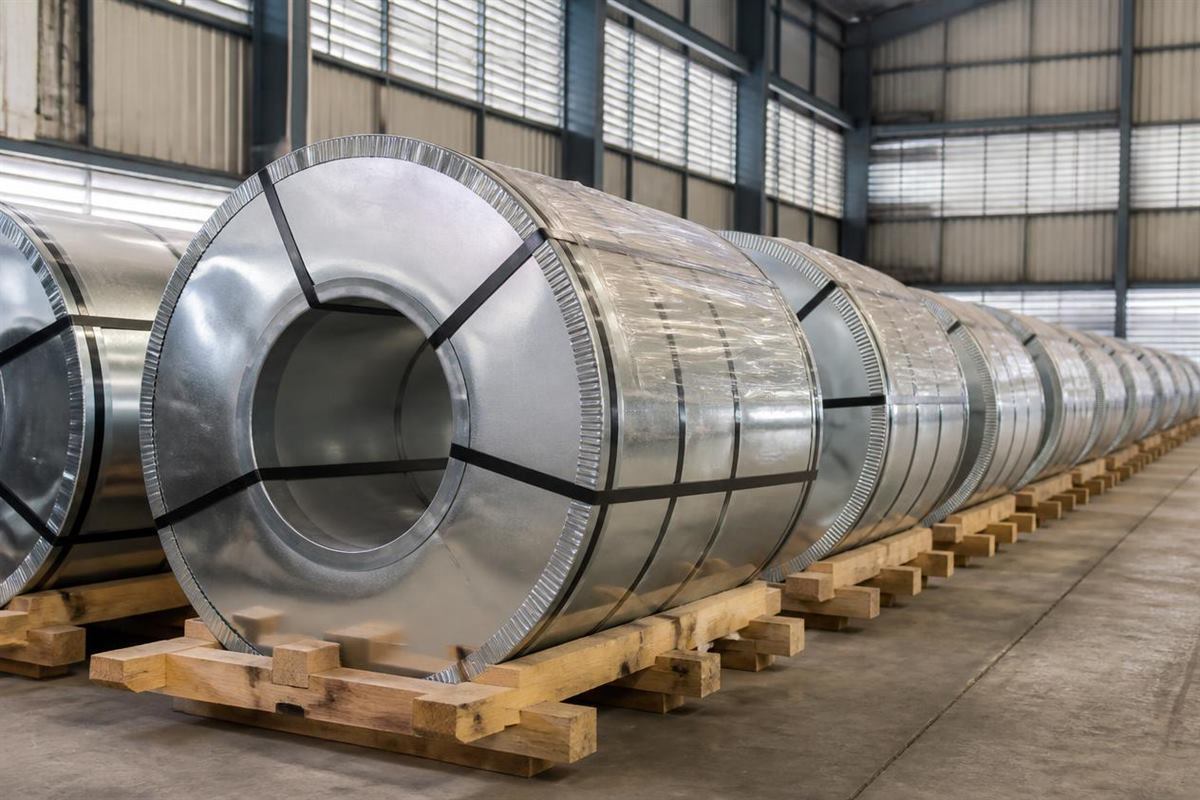
Galvanized roofing coil Africa buyers may source coil for corrugation, trapezoidal profiles, flashings or roll-formed members. Each process can require a different combination of strength, ductility, thickness control, width, edge condition and coil geometry.
Before ordering
- Identify the governing product standard and exact grade.
- State whether ordered thickness refers to base metal or coated product as defined by the contract.
- Define width, slit-edge condition and tolerances.
- Confirm coil ID, OD and mass limits against the line and lifting equipment.
- Describe bend radii, profile depth and any tight folds.
Before volume production
- Review mill certificates against coil labels.
- Measure representative dimensions with an agreed method.
- Run a forming trial where geometry or grade is new.
- Inspect bends, edges and formed surfaces for cracking or flaking.
- Record coil number and settings for traceability.
A grade name from one standards system should not be declared equivalent to a grade from another solely because both are used for forming. Compare chemistry, mechanical-property requirements, coating designation, tolerances and intended use under the actual editions cited in the contract.
4. Design the Component, Not Just the Coil
Material selection cannot correct poor construction details. For roofing and cladding, control roof pitch and drainage, avoid water-retaining laps, use compatible fasteners and washers, remove metal swarf, protect cut edges where the design requires it, and prevent direct contact with incompatible materials.
- Roofing and cladding: assess exposed faces, underside condensation, overlaps, penetrations and coastal salt deposition.
- Ducts and interior linings: consider internal humidity, process vapors, cleaning chemicals and condensation points.
- Light framing: review cut ends, contact with wet materials, sheltered moisture and site storage before enclosure.
- Temporary works or fencing: account for soil splash, trapped debris, damaged edges and handling frequency.
If paint, sealant, insulation, mortar, timber treatment or another material contacts the galvanized surface, confirm compatibility with its manufacturer and the project specification. Avoid blanket compatibility claims based only on generic product names.
5. Control Transport and Site Storage
Ocean transit, inland trucking and construction-site delays can expose coil packs to condensation. Closely nested wet galvanized surfaces can develop storage stain, often called white rust. Prevention depends on a coordinated packing, receiving and storage plan.
- 01
Agree surface protection
Specify passivation, oiling or another permitted treatment and confirm compatibility with downstream painting, bonding or forming.
- 02
Define export packaging
Require robust wrapping, edge protection, supports and labels suitable for the route, while recognizing that packaging is not a substitute for dry handling.
- 03
Inspect on arrival
Record container and pack condition, water marks, torn wrapping, coil damage and label identity before moving or unpacking.
- 04
Store dry and ventilated
Keep packs off the ground, protected from rain and condensation, and follow safe stacking limits. Avoid long storage in wet wrapping.
- 05
Respond to moisture promptly
Segregate affected material, document its condition and obtain technical guidance for drying, cleaning and disposition rather than concealing the evidence.
The detailed chemistry of white-rust prevention and the mechanics of container securing deserve separate procedures. Here, the procurement priority is to assign responsibility and evidence at each handover.
6. Specify Inspection Evidence
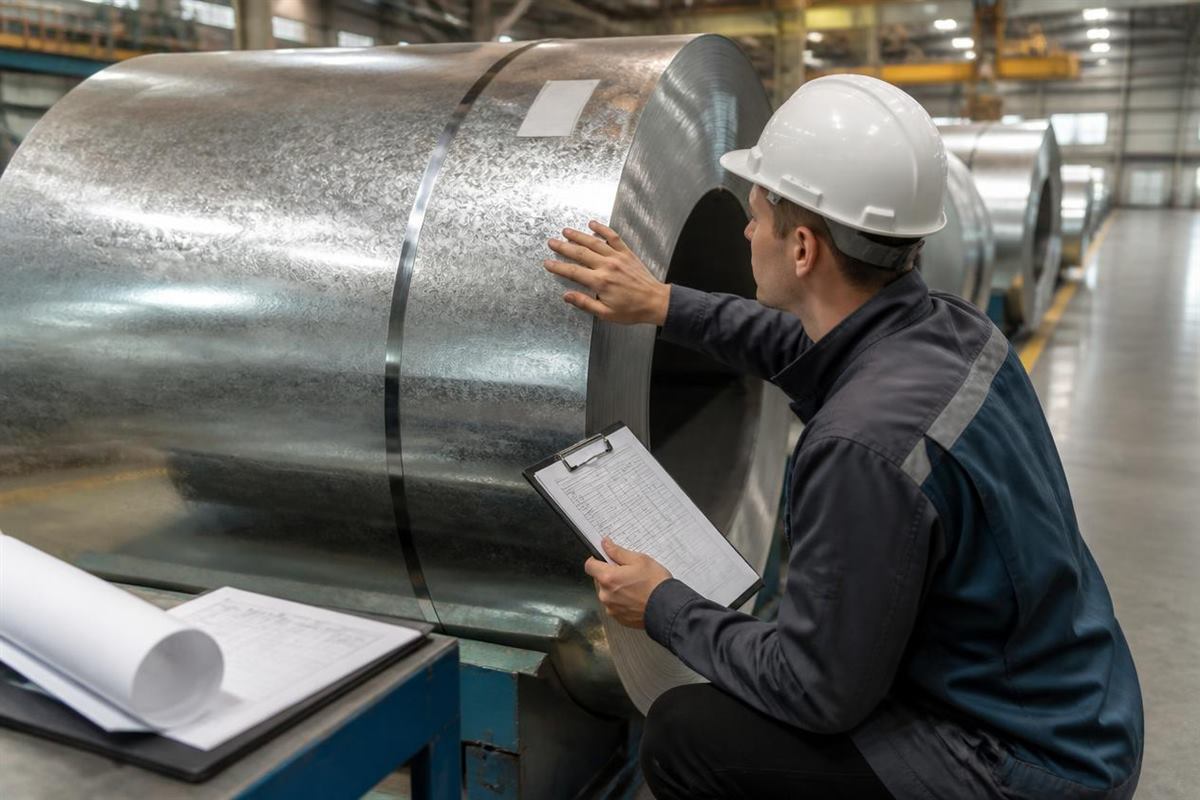
Contract identity
Standard and edition, grade, dimensions, zinc coating designation, finish and surface treatment.
Traceability
Coil number, heat or lot reference where applicable, labels, certificate and packing list.
Measured results
Required dimensional, mechanical and coating test results using the agreed methods and sampling.
Surface condition
Inspection criteria for bare spots, scratches, edge damage, dents, telescoping and storage stain.
Photographic evidence
Representative coil faces, edges, labels, packing condition and loading stages, linked to coil identity.
Exception control
Documented retest, segregation or concession process when results do not meet the PO.
A certificate marked “pass” is not enough when the PO requests measured values. State which results must appear and how they link to each delivered coil or inspection lot.
7. Galvanized Coil Middle East and Africa PO Checklist
Application: component, location, forming process and whether exposure is exterior, interior, sheltered or condensation-prone.
Environment: coastal salt, humidity, rainfall and wetting pattern, dust, industrial or agricultural contaminants, ventilation and maintenance assumptions.
Product: exact standard and edition, grade, zinc coating designation, surface quality, spangle or finish requirement where relevant, and surface treatment.
Dimensions: thickness definition, width, tolerances, edge condition, coil ID, OD and mass range.
Fabrication: profile geometry, minimum bend needs, direction, joining method and any trial requirement.
Documentation: certificate fields, test results, sampling, coil traceability, labels and photographs.
Logistics: packing, moisture controls, lifting restrictions, arrival inspection and site-storage responsibilities.
Common Buyer Mistakes
- Using one material specification for an entire region without describing the project microclimate.
- Ordering only by a familiar grade label and omitting the governing standard and edition.
- Confusing base-metal thickness with coated-product thickness.
- Selecting zinc coating mass without reviewing cut edges, fasteners, overlaps and drainage.
- Ignoring coil mass, ID or OD limits of local forming equipment.
- Assuming dry weather prevents condensation inside packs or completed buildings.
- Accepting untraceable certificates or photographs that do not identify the coil.
Frequently Asked Questions
Is there one best galvanized coating for all African and Middle Eastern projects?
No. The suitable requirement depends on the microclimate, component, design life, detailing, maintenance and governing standard. A qualified project specification should define it.
Does a hot, dry climate eliminate corrosion risk?
No. Condensation, occasional wetting, salts, dust deposits, process moisture and sheltered areas can still create corrosion conditions. Assess the actual wetting cycle.
Can buyers substitute grades from different standards?
Only after technical comparison and contractual agreement. Similar intended uses or names do not prove equivalence.
What should be checked before profiling galvanized roofing coil?
Confirm grade, dimensions, edge condition, coil geometry and traceability, then use a representative forming trial where the combination is new or demanding.
How should wet coil packs be handled?
Document and segregate them, prevent further wetting, and obtain appropriate technical guidance for prompt drying, inspection and disposition.
Final Buying Guidance
A reliable galvanized steel coil Africa Middle East specification is built from exposure, forming, component detailing and logistics. Define those inputs, cite exact standards, require traceable test evidence and plan dry handling from dispatch through installation. This climate-oriented approach avoids both under-specifying harsh microclimates and over-specifying protected applications.
See the Steel Plate & Coil Guide for related dimensional, coating and processing topics.