Galvanized Coil vs Cut-to-Length Sheet: Processing, MOQ and Cost Differences
- Share
- publisher
- Junnan Steel
- Issue Time
- Oct 3,2026
Summary
A buyer guide comparing galvanized steel coil and cut-to-length sheet across processing, usable dimensions, flatness, scrap, packaging, MOQ, freight and landed-cost logic, with a decision matrix.
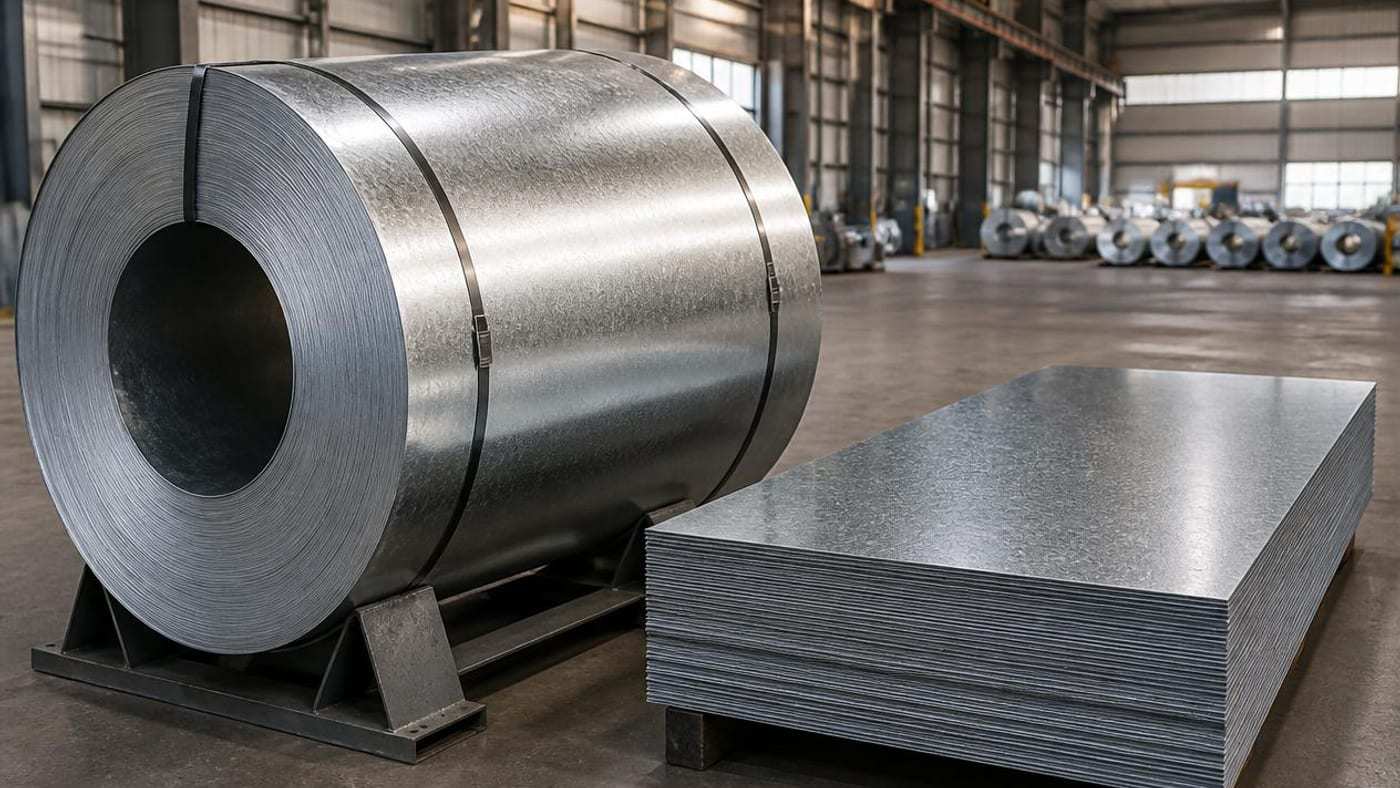
Galvanized Coil vs Cut-to-Length Sheet: Processing, MOQ and Cost Differences
Buyers frequently treat galvanized steel coil and cut-to-length (CTL) sheet as interchangeable, then discover that the choice reshapes tooling, scrap, order quantity, packing and landed cost. The same steel can reach the project as a coil or as flat sheets, but each supply form carries its own downstream requirements and cost drivers. Choosing well means matching the supply form to the buyer's own processing, storage and project schedule.
This guide compares galvanized coil and cut-to-length sheet across processing, usable dimensions, scrap, flatness, packaging, order quantity, freight and landed-cost logic, and closes with a buyer decision matrix. It focuses on supply-form and processing economics rather than coating selection, which is covered in separate guides.
The Direct Answer
Coil generally suits buyers who run their own slitting, roll forming or cut-to-length lines, need flexibility across many lengths and widths, and can handle coil handling and storage. Cut-to-length sheet generally suits buyers who want ready-to-use flat product, have limited processing equipment, or need specific lengths and finishes without investing in a line. The cost comparison depends on the buyer's own processing cost, scrap rate, order quantity, packing, and freight, so no single form is universally cheaper; measure the total landed cost against the buyer's actual operation.
1. What Each Supply Form Really Is
Galvanized coil
Zinc-coated steel wound into a continuous coil. The buyer or a service center unwinds, slits, cuts or forms it into the final geometry. Flexibility is high, but so is the need for handling and processing capability.
Cut-to-length sheet
Coil that has been uncoiled, leveled and sheared into flat sheets of set length, often with controlled flatness and packing. It arrives closer to the finished part, reducing the buyer's processing but fixing dimensions at order time.
The middle ground
Service centers convert coil to sheet, or supply slit coil, giving buyers part of the flexibility without the full processing burden. Where you sit on this spectrum shapes the whole cost comparison.
Same steel, different route
Coating, grade and surface quality can be equivalent; the difference is largely how the material is presented, handled and processed downstream.
Because the underlying steel can be comparable, purchase decisions should focus on which form fits the buyer's process, not on which product is intrinsically superior.
2. Processing and Downstream Equipment
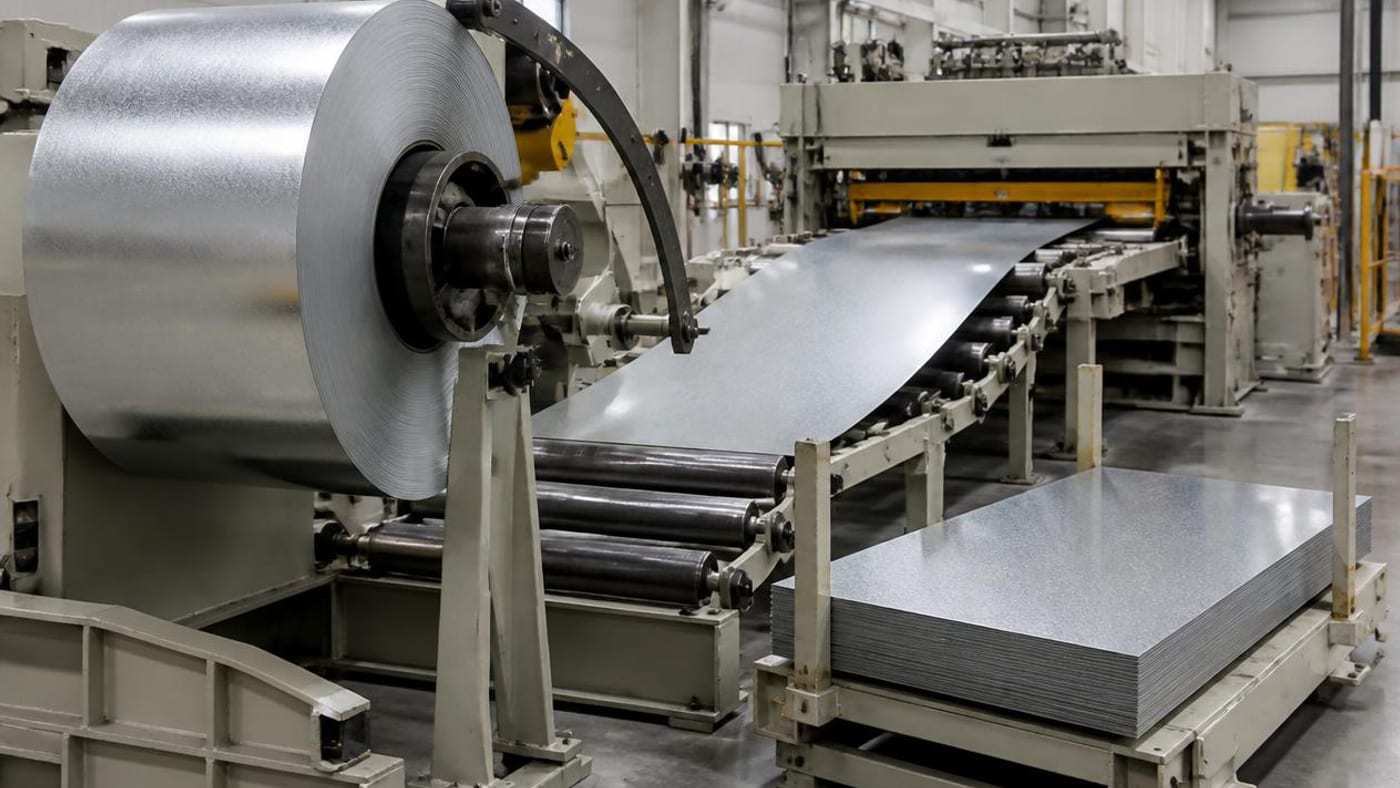
The first cost difference appears in who performs the processing. Coil pushes unwinding, cutting and forming onto the buyer or a converter; cut-to-length sheet keeps most of that work at the supplier or service center.
What coil requires
- Decoiling, slitting or cut-to-length equipment, or a trusted converter.
- Coil handling: cranes, saddles or coil cars, and safe storage space.
- In-line measurement, leveling and scrap control by the buyer.
What CTL sheet requires
- No decoiler or shear for the supplied lengths; sheets arrive ready to use or form.
- Flat sheet handling, pallet or stillage storage, and sheet-level inspection.
- Any further blanking or forming still done by the buyer.
If the buyer already runs suitable lines at low marginal cost, coil can be very efficient. If the buyer lacks that equipment, the invested capital, floor space or converter fee for coil processing must be counted in the comparison.
3. Usable Dimensions, Flatness and Scrap
| Factor | Coil | Cut-to-length sheet |
|---|---|---|
| Dimension flexibility | Any length and width within the line's capability; only the coil width fixes a starting limit. | Fixed at order time to agreed lengths and widths. |
| Flatness | Depends on the buyer's leveling and the coil's own condition; residual coil set must be corrected. | Leveled by the supplier or service center, often with defined flatness limits. |
| Scrap source | Edge trim, head and tail offcuts, setup and trial pieces at the buyer's line. | Mainly offcut from the buyer's own blanking; less line setup scrap. |
| Yield control | Buyer controls nesting and yield, but also bears the learning and setup losses. | Supplier controls the cut program; buyer controls only final blanking. |
Cut-to-length sheet can improve yield when the supplier's nesting and leveling are efficient and the buyer's own line would generate more setup scrap. Coil can improve yield when the buyer can nest many different parts with little waste. The deciding factor is where the scrap actually occurs and who can control it best.
4. Packaging, Handling and Storage
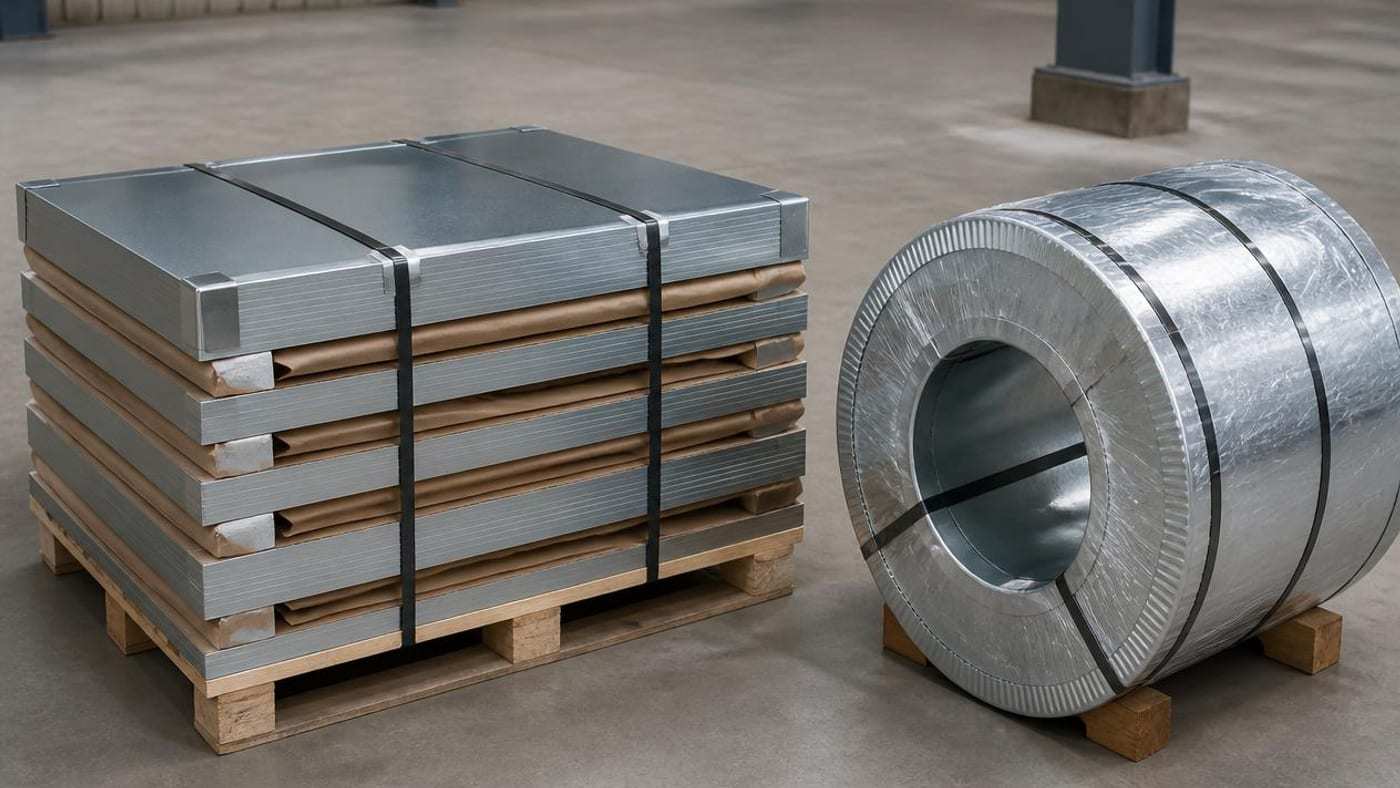
Packaging and handling differ enough that they belong in the total-cost model, not only in the warehouse plan.
Coil packing
Coils are wrapped, edged and often placed on saddles. Unpacking, handling and returning or disposing of packing has a cost and requires space and equipment.
Sheet packing
Cut-to-length sheets are typically stacked, interleaved, banded on pallets or in stillages, which eases inspection and small-scale handling but adds packing cost per sheet.
Storage footprint
Coils need crane access and proper saddles; sheet pallets need flat, clean floor space and protection from edge damage and moisture.
Damage exposure
Coil edges and wraps can be damaged in handling; sheet edges, corners and surfaces are exposed during stacking, handling and transport.
Count the cost of handling equipment, storage space, packing materials and any repacking or re-protection on arrival. These items are often overlooked in a simple ex-works price comparison but can decide the outcome.
5. Order Quantity, MOQ and Freight
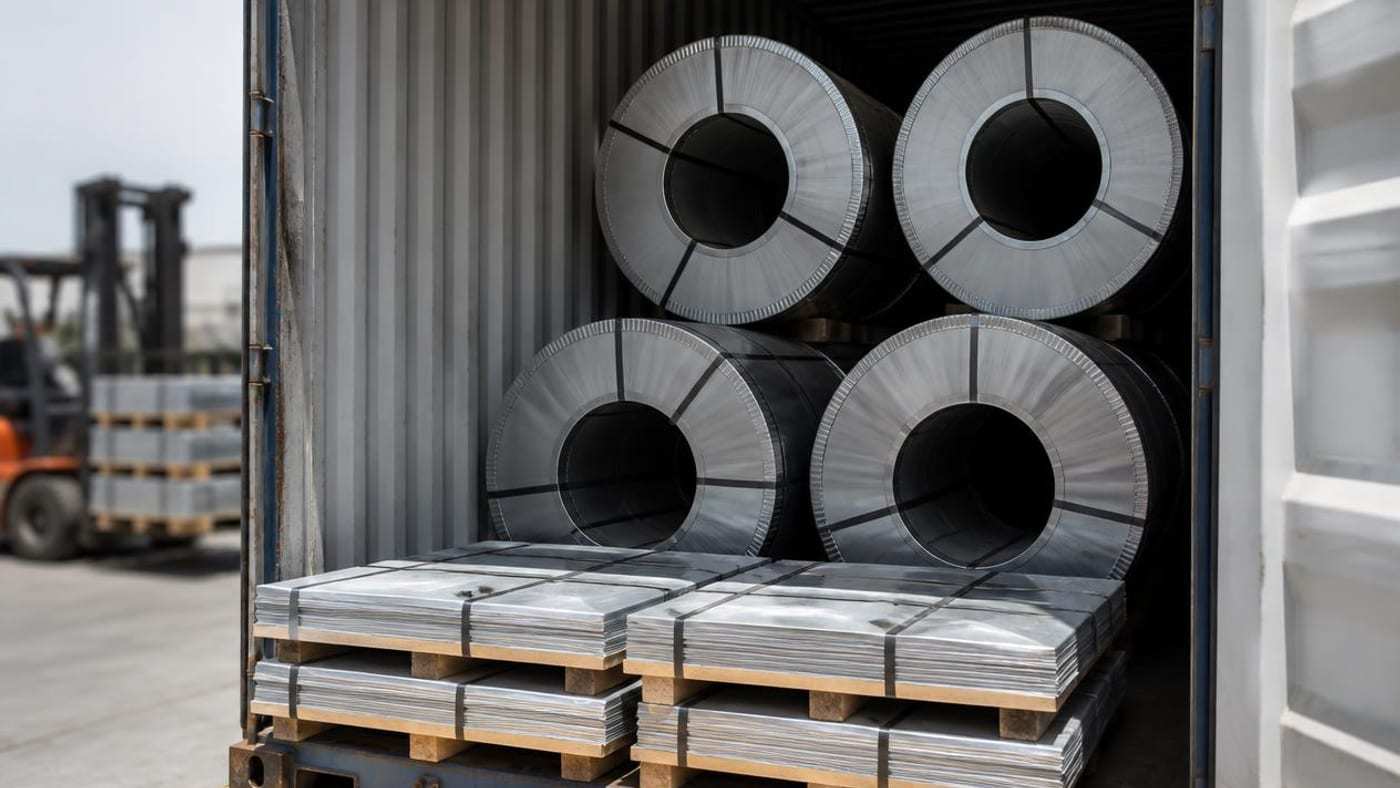
Order quantity and freight behave differently for the two forms, and both feed directly into landed cost.
Minimum order quantity
Coil is often ordered by coil or by tonne with better mill pricing at volume; cut-to-length sheet carries extra processing and packing, so small or mixed-length orders can be limited by minimum charge or setup.
Order flexibility
Coil tolerates length changes late in the process; cut-to-length sheet fixes dimensions at order time, so late design or quantity changes may force reordering or waste.
Freight and loading
Coils load efficiently by weight but need handling equipment and securing; sheet pallets occupy more volume per tonne, which can raise freight or container cost for lighter, bulkier loads.
A container filled with sheet often ships less steel by weight than the same container filled with coil, so freight per tonne can be higher for sheet even when handling is simpler. Compare the landed cost per tonne or per finished part, including inland transport and container utilisation.
6. Landed-Cost Logic
A fair comparison adds the buyer's own costs to the purchase price. Use a consistent unit, such as cost per finished part or per tonne of usable product, and include the items below.
- Material price: ex-works or delivered price for coil or sheet at the agreed grade and coating.
- Buyer processing: decoiling, slitting, cutting, leveling, forming, labor and energy for coil; reduced processing for sheet.
- Scrap and yield: realistic scrap rate and yield for each route, valued at usable material cost.
- Handling and storage: equipment, space and labor for coils versus pallets of sheet.
- Packing and damage: packing materials, unpacking, and expected damage or rework risk.
- Freight and duty: transport, container utilisation and any import charges, expressed per tonne of usable product.
- Working capital: inventory value and cash tied up in coil stock versus ready sheet.
Only after these are added can the two supply forms be compared on equal footing. In some operations coil wins; in others, the premium for cut-to-length sheet is repaid by lower processing, scrap and handling cost.
Buyer Decision Matrix
| Buyer situation | Likely better fit | Why |
|---|---|---|
| Runs own slitting or roll forming, high volume | Coil | Amortises line cost, maximises flexibility and mill pricing. |
| No processing line, needs ready flat product | Cut-to-length sheet | Avoids capital outlay and coil handling; pays a processing premium instead. |
| Many different lengths from one material | Coil | Lengths decided downstream, less fixed-dimension risk. |
| Specific lengths, tight flatness, small batches | Cut-to-length sheet | Supplier-controlled leveling and cut program; simpler handling. |
| Weight-constrained freight, dense loads | Coil | Better container utilisation by weight. |
| Limited storage, no crane, simple handling | Cut-to-length sheet | Pallets and stillages suit smaller footprints and simple handling. |
Use the matrix as a starting point, then run the landed-cost model with the buyer's own numbers. The correct answer is operation-specific and may even vary by project or by order size within the same company.
Frequently Asked Questions
Is cut-to-length sheet always more expensive than coil?
Not always. Cut-to-length sheet usually carries a processing and packing premium, but it can be cheaper overall for buyers without coil processing equipment, when the buyer's own line would generate high setup scrap, or when small, length-specific orders would waste coil. Compare total landed cost per finished part, not the ex-works price alone.
Can I get the same galvanized coating on both coil and sheet?
Yes. Cut-to-length sheet is normally produced from galvanized coil that has been uncoiled, leveled and sheared, so the coating grade can be equivalent. The main differences are how the material is presented, processed and handled downstream rather than the coating itself.
Which form is better for small orders?
Small orders can favour cut-to-length sheet because the buyer avoids setting up a coil line and buys only the lengths needed. However, minimum processing or setup charges and packing costs can apply, so the economics depend on quantity, length mix and the supplier's terms.
How do I compare coil and sheet fairly?
Build a landed-cost model in a consistent unit, such as cost per finished part, including material price, the buyer's processing cost, realistic scrap and yield, handling and storage, packing and damage risk, freight and container utilisation, and working capital. Then test it against the buyer's actual operation and order pattern.
Final Supply-Form Principle
Galvanized coil and cut-to-length sheet carry the same steel but different processing, handling and cost profiles. Coil rewards buyers with their own lines, flexible length needs and dense freight; cut-to-length sheet rewards buyers who value ready-to-use flat product, controlled flatness and simpler handling. Compare the total landed cost against the buyer's real operation and order pattern, and let the numbers, not the ex-works price, decide.
See the Steel Plate & Coil Guide for related galvanized and PPGI coil specification and export topics.